
News & media Stewards of Nature: The Women Protecting Peru’s Huarango Forest
Environmental restoration most often starts with people who understand their landscapes deeply and are committed to protecting them for future generations.
In my previous writing, I shared the story of Lorena, who partnered with agriculture portfolio company Yarambaba to restore the last cloud forest on the western slope of the Andes. Beyond its intrinsic ecological benefits, the project helps safeguard regional water resources. By intercepting moisture from fog and low clouds, the forest protects the hydrological basin and strengthens the region’s long-term agricultural resilience.
During my most recent visit to Peru, I met other women carrying that same spirit of stewardship forward, this time through efforts to protect and restore one of the country’s most threatened ecosystems: the Huarango forest.
Often referred to as the “tree of life of the desert”, the Huarango (Prosopis pallida) is native to Peru’s coastal regions and uniquely adapted to some of the driest environments on earth and can draw water from tens of meters underground. Capable of living for over a millennium, this nitrogen-fixing species enriches poor soils, provides food and habitat for wildlife, and helps regulate harsh desert conditions, enabling other plants and animals to thrive. Historically, Huarango forests covered extensive areas of Peru’s southern coast, supporting rich biodiversity and playing a vital role in maintaining healthy desert ecosystems.
However, estimates suggest that only 1% to 5% of these forests remain today. This is due to centuries of deforestation for fuelwood, unsustainable agricultural expansion, and unsustainable groundwater extraction, which have severely degraded the ecosystem. Protecting and restoring what remains has become an urgent environmental priority.
The women I met are playing a critical role in restoring and protecting this fragile ecosystem, translating traditional knowledge and modern sustainability practices into tangible action on the ground. They are doing incredible work, and we are proud to have them as partners.
Ursula Baert: Conserving native biodiversity at Agrícola Chapi
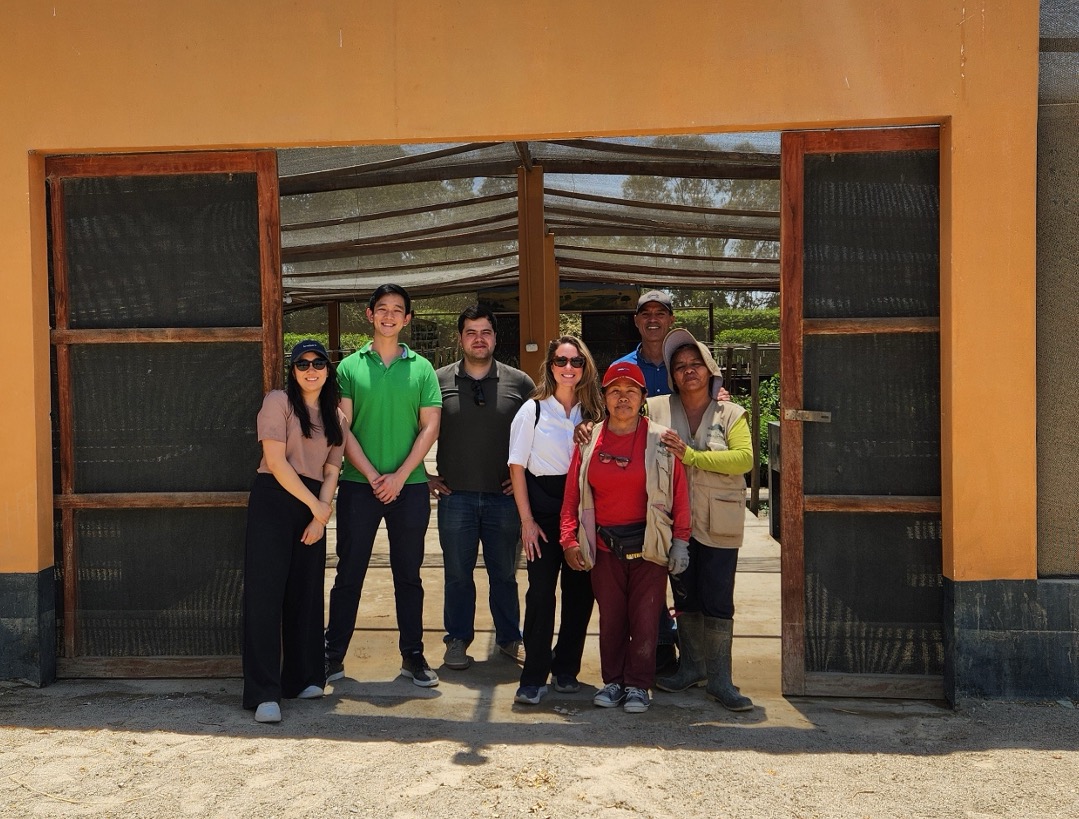
Photo caption: Members of Cordiant’s ESG and Investment teams with representatives from Chapi and Huarango Nature at the native species nursery on Chapi’s Don Ernesto Estate, a hub for dry forest restoration and biodiversity conservation.
Ursula Baertl leads the sustainability initiatives at Chapi, an agro-producer of fruits operating in one of Peru’s most water-scarce regions. While their production is not considered regenerative agriculture per se, the company has consistently taken a proactive approach, testing and implementing practices that improve sustainability, resource efficiency, and long-term resilience.
Understanding the critical importance of water in the region, Chapi has positioned itself as a leader in water stewardship. It is one of the few organisations locally to have obtained certification under the Alliance for Water Stewardship (AWS) Standard, demonstrating responsible water management through efficient use of water and collaboration with other stakeholders to address shared watershed challenges.
Beyond water, Ursula co-founded Asociación Horizonte Corporativo, a non-profit association focused on education, health, and environmental projects. Through this platform, she has helped lead one of the most distinctive conservation efforts in the Ica region, centred on restoring and protecting native dry forest ecosystems.
A key initiative is the Don Ernesto Native Species Forest, established in 2007 as part of Chapi’s operations. Covering nearly 9 hectares, the forest has grown from 20 pioneer species into a thriving ecosystem with more than 80 plant species and over 100 animal species. It now serves as a biological corridor, supporting biodiversity, pollination, soil regeneration, and microclimate stabilisation while demonstrating the long-term potential of ecosystem restoration in arid environments.
Complementing this effort is the native species nursery managed by Huarango Nature (a local NGO), located within Chapi and considered the operational heart of these initiatives. Developed with the support of partners such as Sainsbury’s and Kew, the nursery not only produces plants for restoration but also enables the scaling of conservation efforts across different contexts. Native species are cultivated for forest restoration and biodiversity conservation, for green areas and public spaces, and for integrating certain plants into agricultural systems as hedges and biological corridors to support natural pest control. The seed bank and propagation infrastructure allow for the preservation and reintroduction of species, some of which are at risk.
The close collaboration with Huarango Nature further strengthens its efforts to conserve and propagate native species, restore dry forest ecosystems, and play an important role in community engagement by supporting planting initiatives in schools and households.
Importantly, these initiatives are not isolated. They are integrated into Chapi’s broader sustainability strategy and contribute to its environmental certifications, while also creating value by enhancing ecosystem services within and around its operations.
Through her leadership, Ursula Baertl illustrates how sustainability in agriculture can go beyond compliance – showing that even in intensive production systems, it is possible to restore ecosystems, strengthen biodiversity, and build resilience over time.
Marleny García de Schultz, Agrolatina: Scaling conservation through partnership
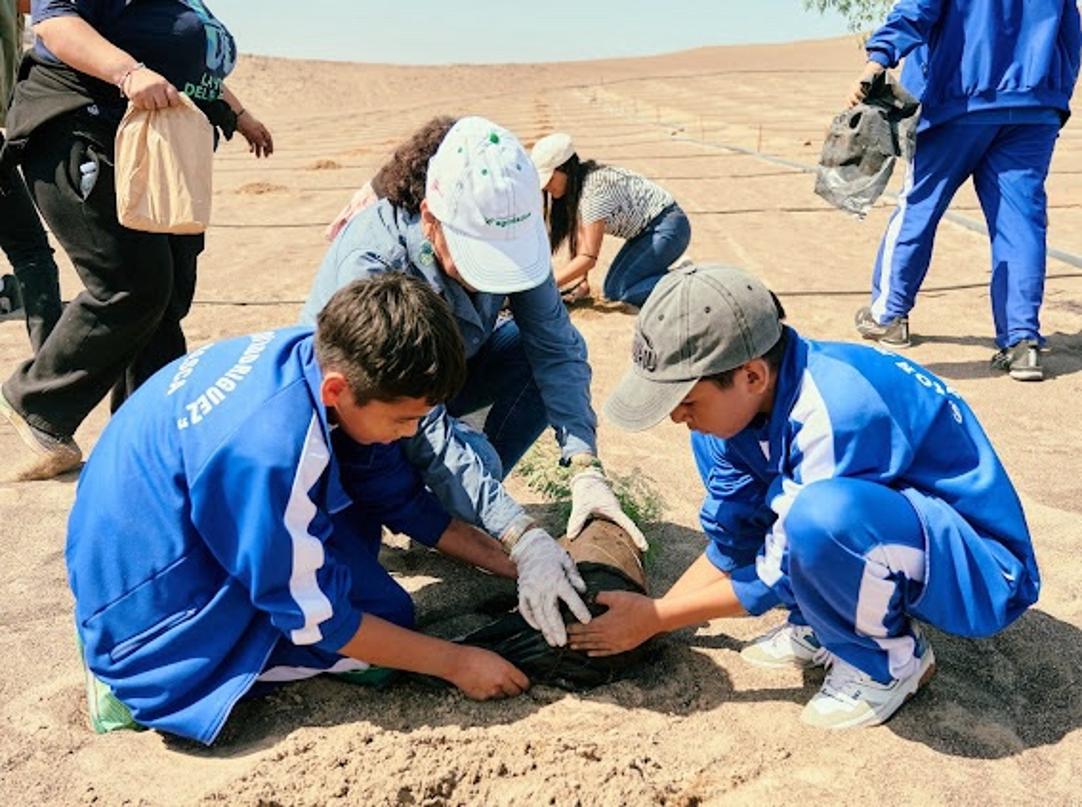
Photo caption: Marleny García planting a native Huarango tree with local students during the June 2026 reforestation campaign in the Corralones sector of the San Fernando National Reserve.
Marleny García de Schultz, Institutional Relations Manager at Agrolatina, has spent more than two decades with the company and has helped spearhead a wide range of environmental initiatives focused on protecting the Huarango ecosystem.
As a major agro-exporter operating in Ica and Nazca, Agrolatina has integrated biodiversity conservation into its sustainability strategy and collaborated with Peru’s Ministry of the Environment to protect a 22.5-hectare Huarango forest. One of its flagship projects, launched in partnership with Huarango Nature in 2020, established 20 restoration islands planted with native species across nearly three hectares of habitat adjacent to agricultural land. In addition to establishing the restoration islands, the company has invested in irrigation infrastructure and funds an ongoing maintenance program – including irrigation, pruning, fumigation, reforestation, boundary maintenance, and seed collection for nursery production – to ensure the project’s long-term success.
These restoration areas have become important refuges for local wildlife and helped regenerate remnants of ancient Huarango trees, whose extensive root systems improve soil stability, increase fertility and reduce erosion. Monitoring has documented strong plant growth and increased activity among native birds, insects and pollinators. The project’s success contributed to Agrolatina’s San Juan del Totoral farm receiving Bee Better Certification, making it one of the first agricultural operations in the region to achieve this recognition.
The company has also entered into a five-year agreement with SERFOR, Peru’s National Forestry and Wildlife Service, to support reforestation efforts in the San Fernando Reserve by donating more than 30,000 native Huarango trees. In 2025, 7 hectares were reforested in the Corralones sector of the San Fernando National Reserve in collaboration with SERNANP, Peru’s government agency responsible for conserving the country’s biodiversity and managing its National System of Protected Natural Areas. Looking ahead, Agrolatina plans to expand its conservation concession area to 114 hectares. This year, their objective is to restore an impressive 50,000 m².
As part of this ongoing commitment, a new reforestation campaign was carried out on June 17, 2026, in the Corralones sector of the San Fernando National Reserve. During the event, 2,000 native Huarango seedlings donated by Agrolatina were planted, contributing to the restoration of 2.5 hectares. The initiative brought together 200 participants, including local high school students and representatives from the main stakeholders.
Importantly, Marleny and her team recognise that long-term conservation depends on community engagement. Through partnerships with schools and local authorities, Agrolatina has donated Huarango seedlings and developed environmental education programmes that encourage students to become active stewards of their environment. Students sponsor and care for individual trees, while teachers receive training designed to strengthen environmental awareness within local communities. For Marleny, this is an important way to build the next generation of nature stewardship.
The company also supports broader conservation outreach through initiatives ranging from educational field visits for agricultural students to sponsorship of events such as the Marcona Wind Trail, which raises awareness about the protection of Peru’s unique coastal and desert ecosystems.
Looking ahead: Degradation or regeneration.
These stories of the Huarango forest illustrate that biodiversity is not peripheral to agriculture; it is foundational. Healthy soils, reliable water cycles, pollination services and climate resilience all depend on functioning ecosystems.
Agriculture has a significant footprint on natural landscapes, particularly in fragile environments such as Ica’s desert region. This creates both responsibility and opportunity. As climate pressures intensify and ecosystems continue to decline, the sector will play a decisive role in determining whether landscapes move toward further degradation or regeneration.
The projects stewarded by Ursula and Marleny demonstrate the tangible benefits of long-term environmental thinking: healthier soils, improved water retention, increased pollination and greater resilience to climate variability. They also show the impact that committed individuals can have when conservation becomes part of day-to-day business decision-making.
At Cordiant, we are proud to partner with companies that recognise their role as responsible stewards of the landscapes in which they operate. Protecting and restoring natural capital is a core belief at Cordiant because it safeguards livelihoods, strengthens communities, and creates enduring value. It is also good business: the long-term success of agriculture depends on healthy, resilient, and regenerating ecosystems. By investing in businesses that enhance the natural systems on which they rely, we believe we can generate sustainable returns while leaving the land more productive and resilient for future generations and supporting long-term cash flow generation.